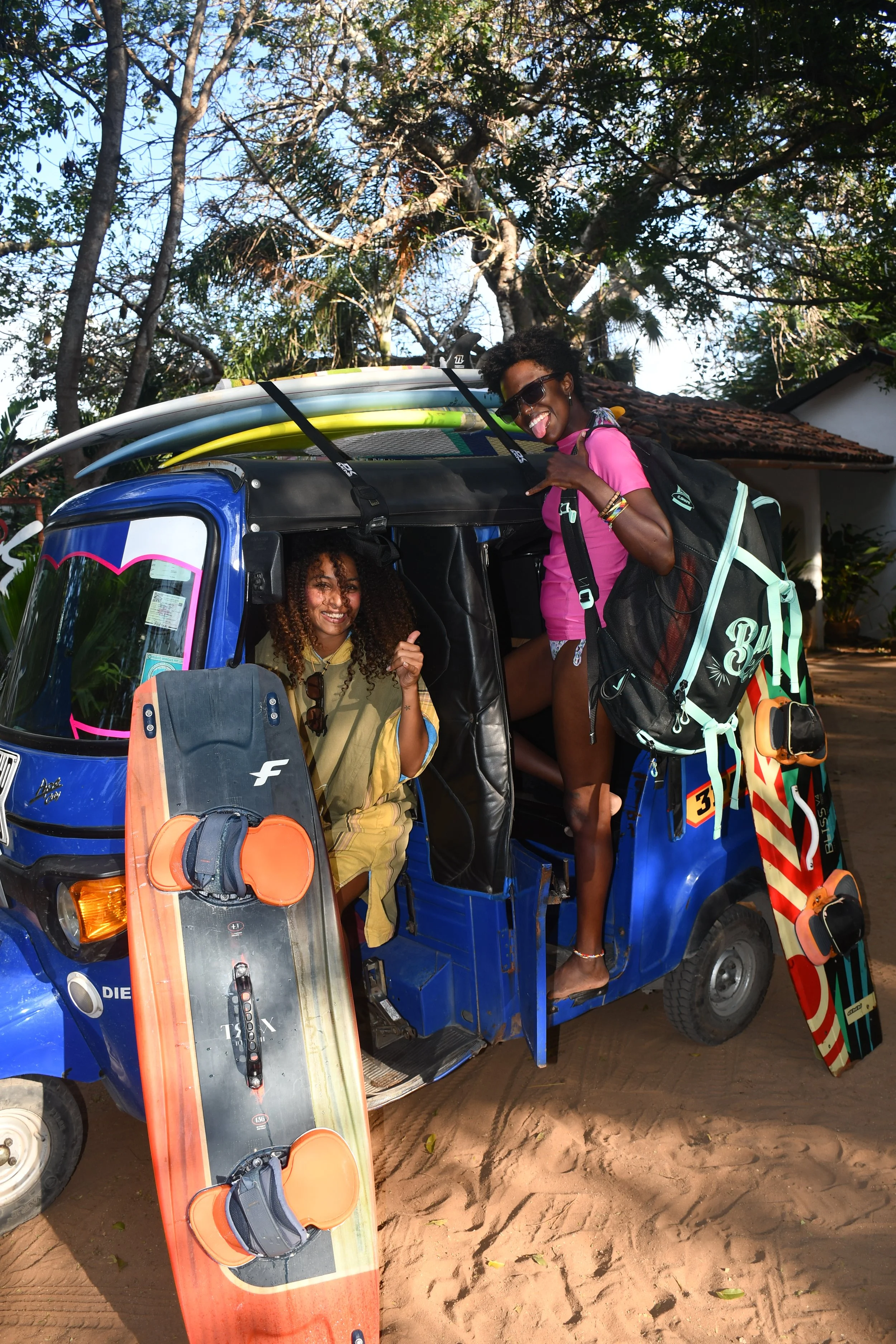
Winter can feel endless when travelling with children who crave sunshine, space, and movement. For kitesurfing parents, the challenge is finding a destination that offers reliable wind, safe learning conditions, and a relaxed environment where children can learn, progress, or simply enjoy being outdoors. Kenya’s north coast, and Kilifi in particular, delivers that balance in a way few destinations do. Salty’s Kitesurf Village has become a natural base for families looking to stay longer, ride more, and slow down without compromising on quality.
This guide is written for parents who kite or foil and are travelling with children of different ages and skill levels. Some children arrive as complete beginners, others are already confident on the water, and some are simply happy to be in a warm, social, outdoor setting. What follows covers wind seasons, why Kilifi works so well for families, how learning and progression happens, and what to expect when planning an extended stay.
Why Kilifi Works So Well for Families
Kilifi offers something rare for kitesurfing families: conditions that genuinely support learning without removing the excitement of the sport. The Kilifi provides shallow, warm, flat water that makes early kite and foil sessions far less intimidating than open ocean beaches. Children can focus on balance, kite control, and confidence instead of dealing with strong shore break or heavy chop.
Progression feels natural here. Moving from body dragging to board starts, and later from twin tip to foil, happens in an environment that rewards patience rather than brute strength. For parents, this means time on the water without constant worry. Sessions can run in parallel, with children learning nearby while adults ride or foil in the same area.
Beyond the water, Kilifi has a strong sense of community. Salty’s attracts families and travellers who value learning, time outdoors, and shared experiences. Social life exists, but it is not driven by nightlife. Evenings tend to revolve around meals, conversations, and planning the next day’s sessions. That rhythm works well for parents and children alike, especially during longer stays.
Having accommodation, lessons, equipment, and food in one place removes friction from daily life. Fewer transfers, fewer decisions, and more time spent doing what matters makes a noticeable difference when travelling with children.
Understanding Wind Seasons and the Kas Kazi Advantage
Kenya’s coastline benefits from seasonal trade winds, and understanding them helps families plan smarter trips. The Kas Kazi winds typically dominate the first quarter of the year, from January through March. During this period, wind tends to be steady, warm, and well suited to both kitesurfing and foiling.
These conditions are particularly friendly for families. Winds are often strong enough to ride daily without being overwhelming for learners. Foiling thrives during this season, extending water time even on lighter days. Many families choose to stay for several weeks rather than a single holiday, allowing flexibility around wind cycles and giving children time to absorb lessons without pressure.
After March, winds can still appear, especially for foiling and beginner sessions. Kenya’s wind is largely thermally driven, with the best conditions usually forming from mid-morning through the afternoon. Longer stays increase the chance that every family member gets sessions suited to personal ability rather than forcing everyone into the same conditions.
Accommodation That Supports Family Life
Parents travelling with children often look for comfort, safety, and atmosphere rather than luxury. Salty’s offers a mix of private ensuite rooms and budget-friendly surfer rooms, making it accessible for families planning extended stays. The accommodation feels relaxed and intentional, avoiding both resort formality and rough camping setups.
Shared dining and social areas encourage connection without obligation. Children quickly find other kids to ride with or relax alongside, while parents appreciate being part of a community that understands wind forecasts, lesson schedules, and early nights before windy mornings.
Having an on-site restaurant simplifies daily routines. After long sessions on the water, meals are easy, nourishing, and social, removing the need to plan transport or search for suitable food options every day. That simplicity becomes especially valuable over longer stays.
Lessons, Gear, and Progression for Every Level
One of the strengths of Salty’s is the ability to cater to mixed-ability families. Beginners, both children and adults, start with structured lessons that build confidence step by step. Theory, safety, body dragging, and board control are approached at a pace suited to each learner, rather than rushed to meet holiday timelines.
Foiling lessons are adapted carefully, especially for younger riders. Flat water and predictable wind allow learners to focus on technique and balance, which accelerates progression and reduces frustration. Confidence grows quickly in this kind of environment.
For intermediate and advanced riders, equipment rental supports freeride kiting, foiling, and higher-wind sessions when conditions allow. Progression coaching is available for those refining skills rather than learning from scratch. This flexibility allows parents and children at different stages to enjoy the same trip without compromise.
Getting to Kilifi Without the Stress
Travel logistics matter when travelling with children. Flying from Nairobi to the coast significantly reduces fatigue, especially after safaris or long international flights. Malindi is the closest airport to Kilifi and provides a smooth transition from plane to beach.
Road transfers from the airport are straightforward and comfortable, allowing time to rest before the first session. Keeping travel simple preserves energy for learning, riding, and settling into a routine that works over several weeks.
Planning Beyond the Kite Sessions
A successful family kite trip balances water time with rest and variety. Kenya’s tropical climate makes outdoor life easy, whether riding, swimming, paddleboarding, or cycling around the area. On lighter wind days, creek activities, pool time, and local exploration keep children engaged without overloading schedules.
Cultural experiences such as dhow sails or beach picnics add depth to the trip without requiring long journeys. For families travelling during the school year, planning study time around wind windows helps maintain balance while still prioritising time together.
Longer stays naturally reduce pressure. Children learn better when sessions feel playful rather than rushed, and parents enjoy riding when conditions suit personal goals rather than fixed dates.
Why Salty’s Makes Sense for Family Kite Trips
Families travelling with children tend to look for three core things: safe and supportive learning environments, consistent wind opportunities, and a sense of comfort and belonging. Salty’s Kitesurf Village delivers all three in a setting that encourages longer stays rather than short, intense trips.
Whether escaping winter, planning a Kas Kazi season stay, or introducing children to kitesurfing and foiling in a calm, tropical environment, Kilifi offers space to slow down and truly settle into life by the water.